


Christian apologetics does not begin with clever arguments. It does not begin with philosophy, science, or cultural analysis. It begins where Christianity itself begins: with God speaking.
Before we ever ask whether God can be proven, the Bible starts somewhere else. It begins with God speaking, not with us evaluating Him. Scripture presents God as the One who defines truth, creates meaning, and governs reality. Apologetics that drifts away from that foundation doesn’t become more persuasive. It becomes unstable.
Apologetics does not float above theology.
It stands on it, or it collapses.
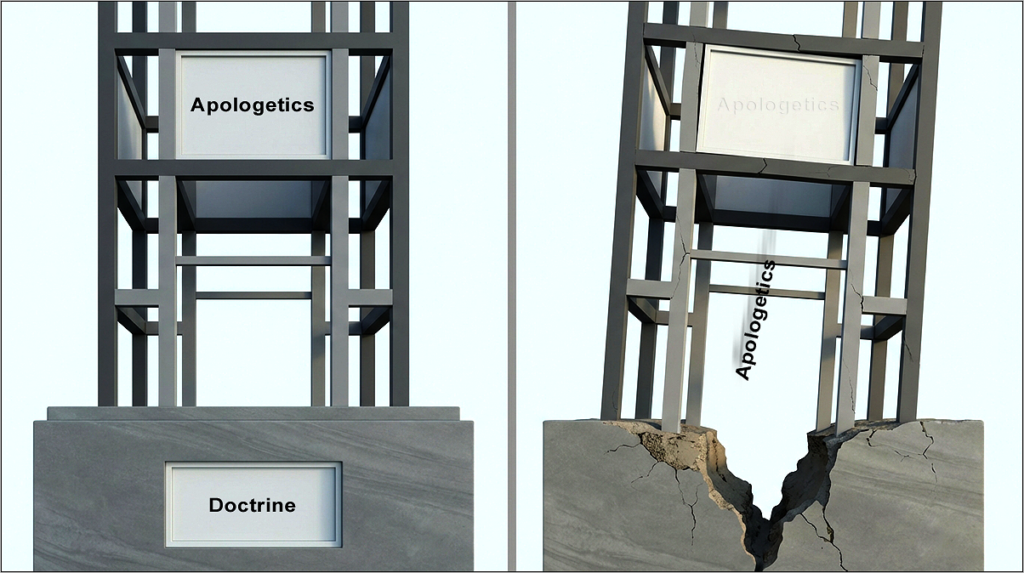
This category exists to make one thing unmistakably clear: doctrine is not optional for defending the Christian faith. It is the backbone.
Why Theology Comes First
Many Christians assume theology comes after belief, after the arguments are settled and faith is established. Scripture reverses that order.
The Bible does not invite us to evaluate God from a neutral position. It declares that neutrality itself is a myth. Everyone already lives from basic commitments that shape how they think and argue. Theology names those commitments. Apologetics exposes them.
When apologetics tries to operate without theology, it quietly borrows assumptions it cannot justify. It begins to speak the language of autonomy, pretending that human reason stands above revelation rather than beneath it.
You do not argue your way to theology.
You argue from theology, whether you realize it or not.
Scripture Is Not a Supporting Actor
One of the most common mistakes in modern apologetics is treating the Bible as evidence instead of authority. Scripture is quoted at the end of arguments rather than recognized at the beginning as the very ground that makes argument possible.
But the Bible does not present itself as one voice among many. It claims to be the voice of the living Triune God — the One who created the mind that reasons, the world that is studied, and the moral law that convicts.
To defend the faith while sidelining Scripture is to defend Christianity while quietly denying its own claims about reality.
If Scripture is only allowed to speak after
reason approves it, then reason has become your god.
This category will not treat theology as an embarrassment or a liability. It will treat it as what Scripture says it is: necessary, authoritative, and unavoidable.
Doctrine Shapes How We Think
What you believe about God determines what you believe about everything else.
- If God is the Creator, then the world is not self-explanatory.
- If God is sovereign, then history is not random.
- If God reveals Himself, then knowledge is not accidental.
- If man is fallen, then human reasoning is not neutral.
These are not abstract theological claims. They shape how we approach science, ethics, culture, law, education, and even everyday conversation.
Apologetics that ignores doctrine ends up defending a version of Christianity that doesn’t actually exist.

Theology and the Real World
This category is not about hiding in ivory towers or memorizing definitions for their own sake. Theology matters because real people live real lives under real pressure.
Teenagers face questions about identity and meaning.
College students face skepticism dressed as sophistication.
Adults face moral confusion, cultural hostility, and intellectual intimidation.
Theology answers those pressures by reminding us who God is, who we are, and why the world makes sense at all.
Christian theology is not abstract. It affects every facet of real life.
What You’ll Find in This Category
In Bible & Theology, you’ll find:
- Clear explanations of essential Christian doctrines
- Scripture-driven analysis that connects belief to worldview
- Theological foundations that govern apologetics
- Careful engagement with ideas that challenge biblical truth
- A consistent refusal to separate faith from thinking
This category is not designed to compete with apologetics. It exists to fuel it.
Theology Before the Argument
At TBBA, we are unapologetic about this conviction: Christian apologetics only works when it remains Christian. It begins where God begins, with Scripture itself as the final authority.
Before we argue with the world, we must be clear about what we believe and why it governs every argument we make.
Doctrine is not the enemy of persuasion.
It is the reason persuasion is possible at all.